Enzai
Enterprise AI governance platform trusted by Fortune 500 companies
Enterprise AI governance platform trusted by Fortune 500 companies
Project Details
Project Details
Services
Design Systems
Design Systems
Web Design
Web Design
Branding
Branding
Client
Enzai
Enzai
Location
Belfast, Northern Ireland
Belfast, Northern Ireland
Duration
6 months • 2025
6 months • 2025
Team involved
5 Product Designers
2 Client Stakeholders
2 Software Developers
1 Team Manager
5 Product Designers
2 Client Stakeholders
2 Software Developers
1 Team Manager
Info
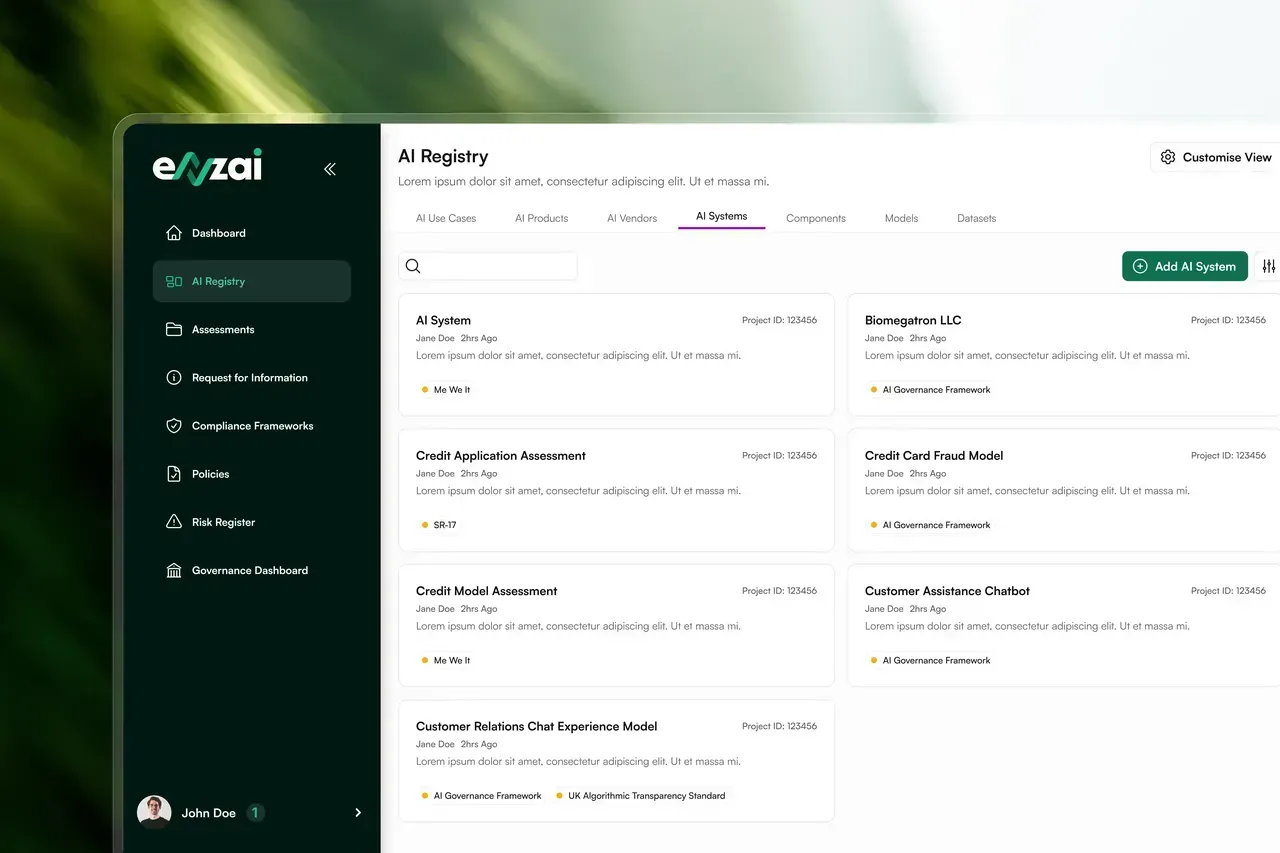
Enzai is a Belfast-based AI governance platform that has raised $4M in seed funding led by Cavalry Ventures, with backing from Seedcamp, Techstart Ventures, and angel investor Paul Forster, co-founder of Indeed.com. The platform helps regulated enterprises, including Fortune 500 companies, manage AI risk and compliance across frameworks like the EU AI Act, ISO 42001, and NIST RMF. The existing site still looked and felt like the early-stage company Enzai used to be. The brief was clear: stop looking like a startup that got funded, start looking like the modern authority the company has become. The project centered on building a comprehensive design system from the ground up, disciplined enough to support a full Webflow rebuild across product, solutions, and resource pages, while giving the team a shared language to design and ship consistently as the platform keeps expanding.
Enzai is a Belfast-based AI governance platform that has raised $4M in seed funding led by Cavalry Ventures, with backing from Seedcamp, Techstart Ventures, and angel investor Paul Forster, co-founder of Indeed.com. The platform helps regulated enterprises, including Fortune 500 companies, manage AI risk and compliance across frameworks like the EU AI Act, ISO 42001, and NIST RMF. The existing site still looked and felt like the early-stage company Enzai used to be. The brief was clear: stop looking like a startup that got funded, start looking like the modern authority the company has become. The project centered on building a comprehensive design system from the ground up, disciplined enough to support a full Webflow rebuild across product, solutions, and resource pages, while giving the team a shared language to design and ship consistently as the platform keeps expanding.
Impact & Context
Impact & Context
The Impact
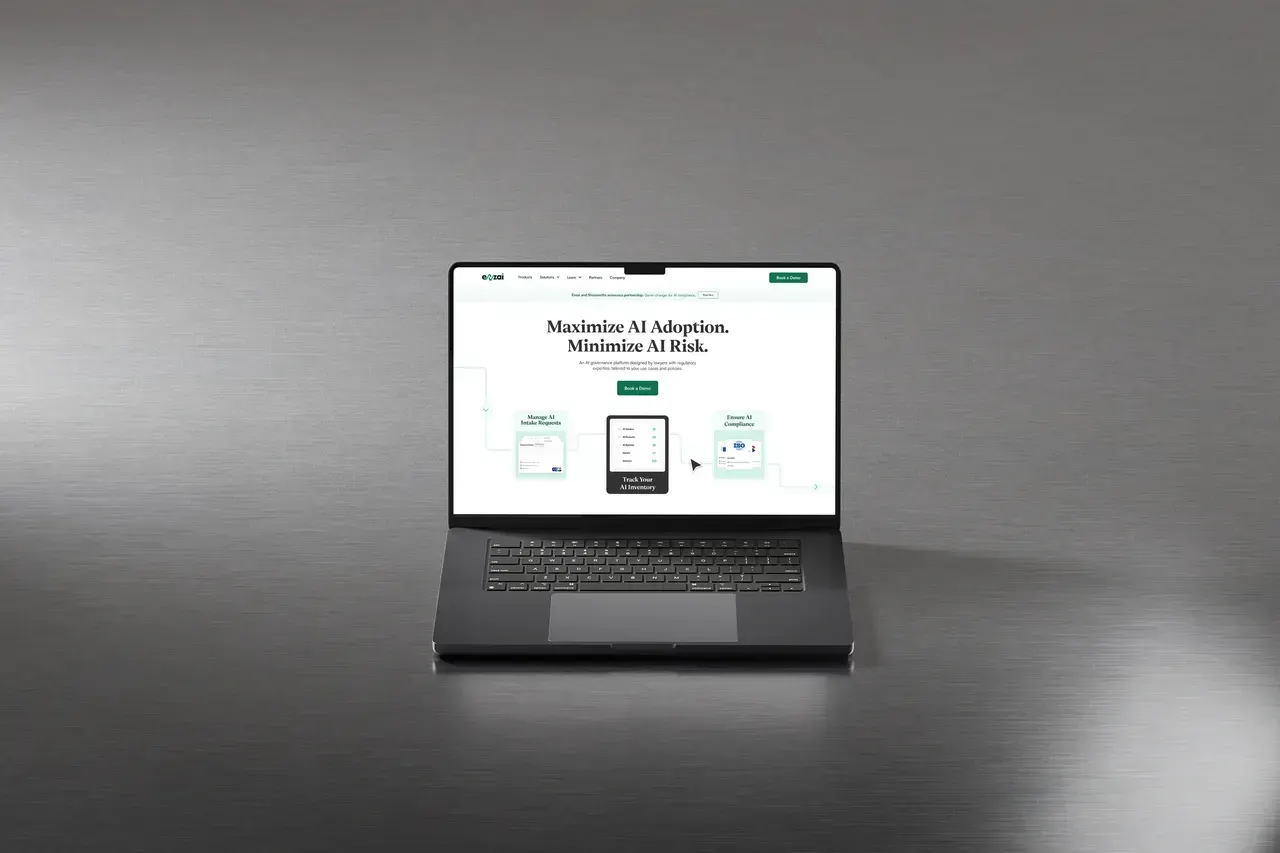
Enzai had raised $4M in seed funding, led by Cavalry Ventures with backing from Seedcamp, Techstart Ventures, and Paul Forster, co-founder of Indeed.com, but its site still looked like the early-stage startup it had already outgrown. I built its first comprehensive design system from the ground up, disciplined enough to support a full Webflow rebuild across product, solutions, and resource pages, giving the brand the authority its Fortune 500 clients expect from a compliance platform.
Enzai had raised $4M in seed funding, led by Cavalry Ventures with backing from Seedcamp, Techstart Ventures, and Paul Forster, co-founder of Indeed.com, but its site still looked like the early-stage startup it had already outgrown. I built its first comprehensive design system from the ground up, disciplined enough to support a full Webflow rebuild across product, solutions, and resource pages, giving the brand the authority its Fortune 500 clients expect from a compliance platform.
Highlights
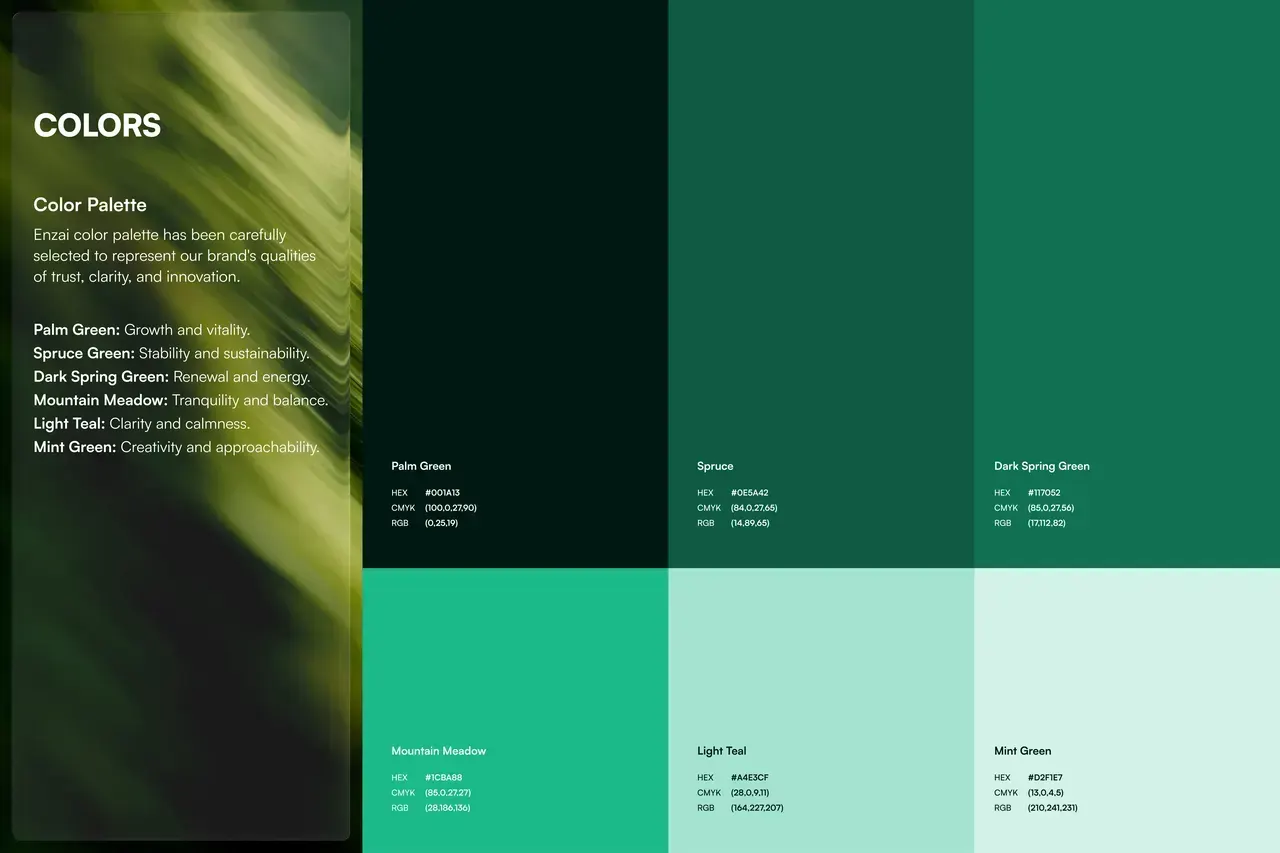
Full token system built from scratch: A refined green palette with named, purposeful colours (Palm Green, Spruce, Mountain Meadow) replaced generic swatches, paired with a disciplined greyscale and dedicated status colours for compliance-critical states.
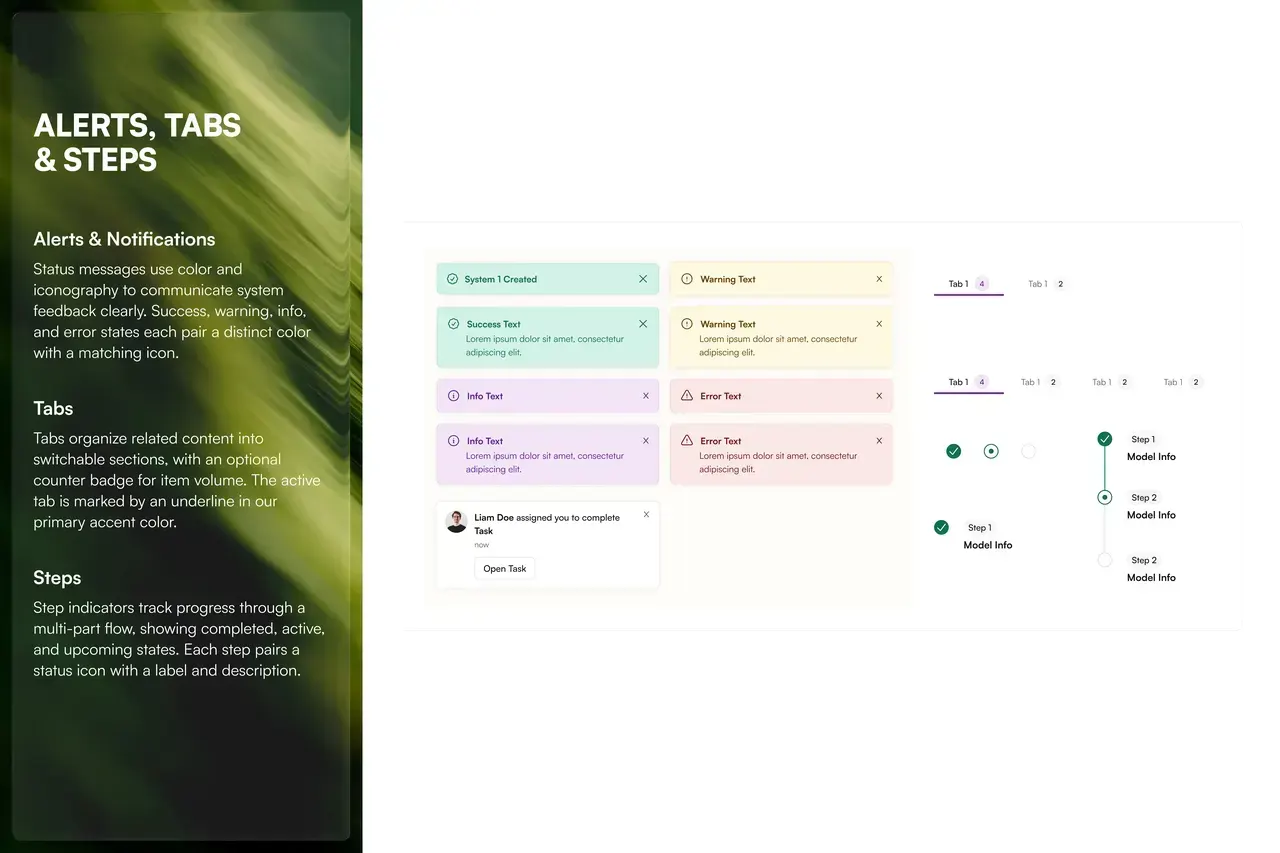
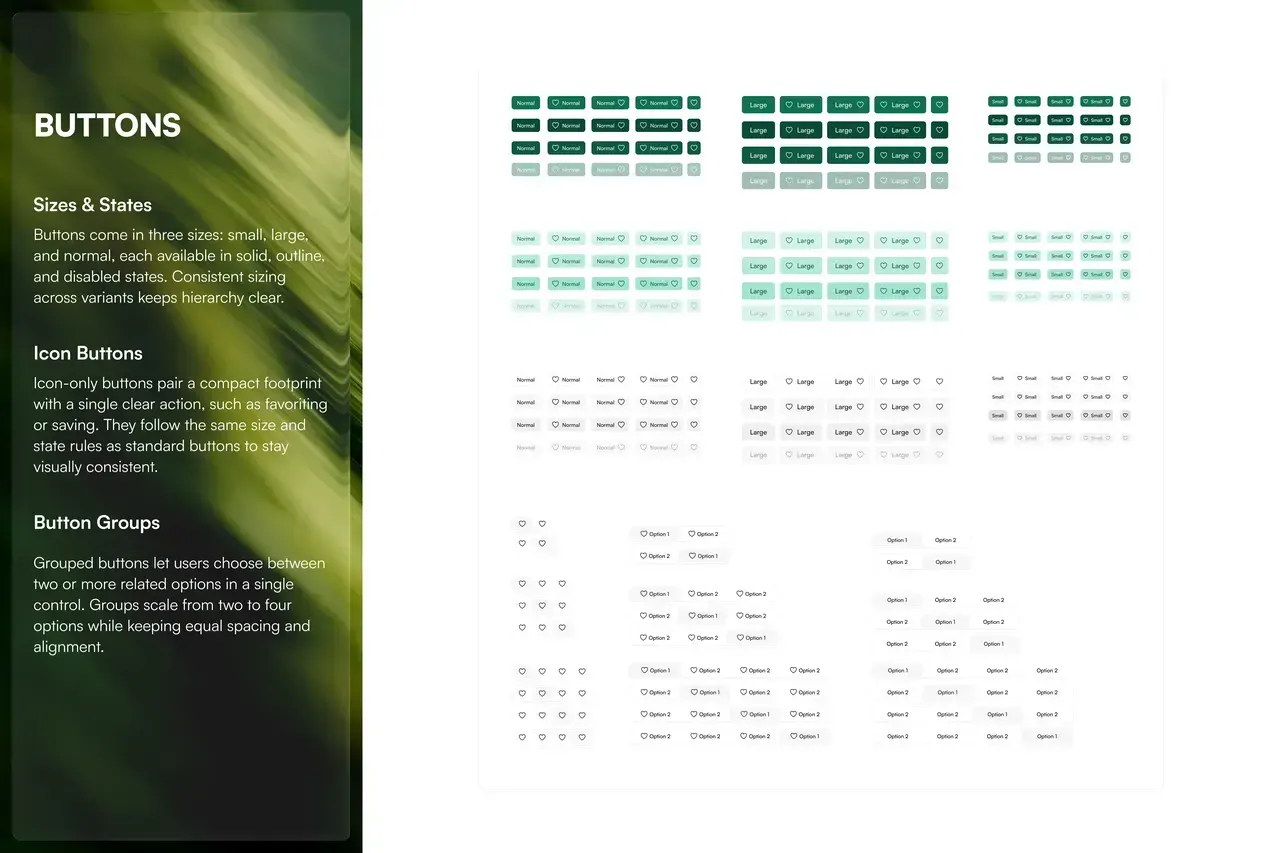
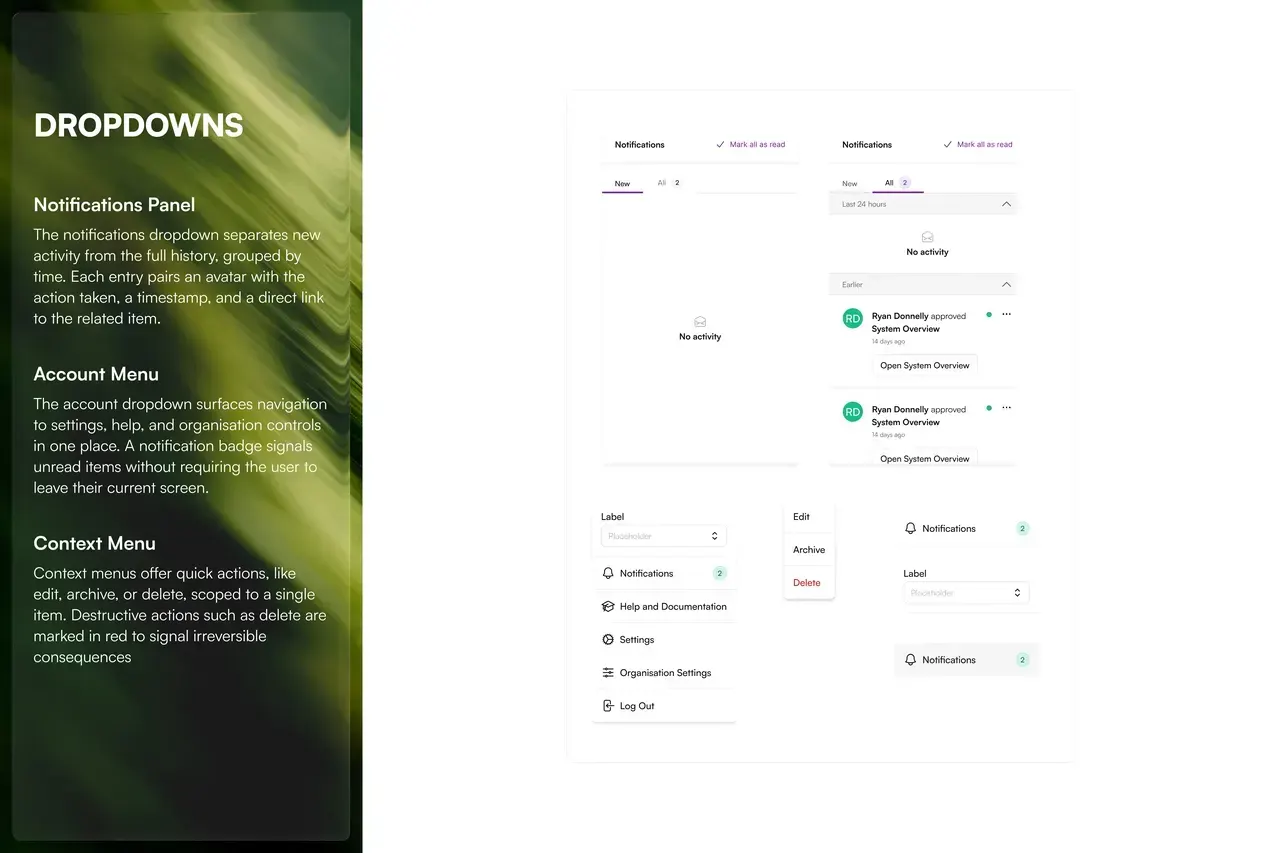
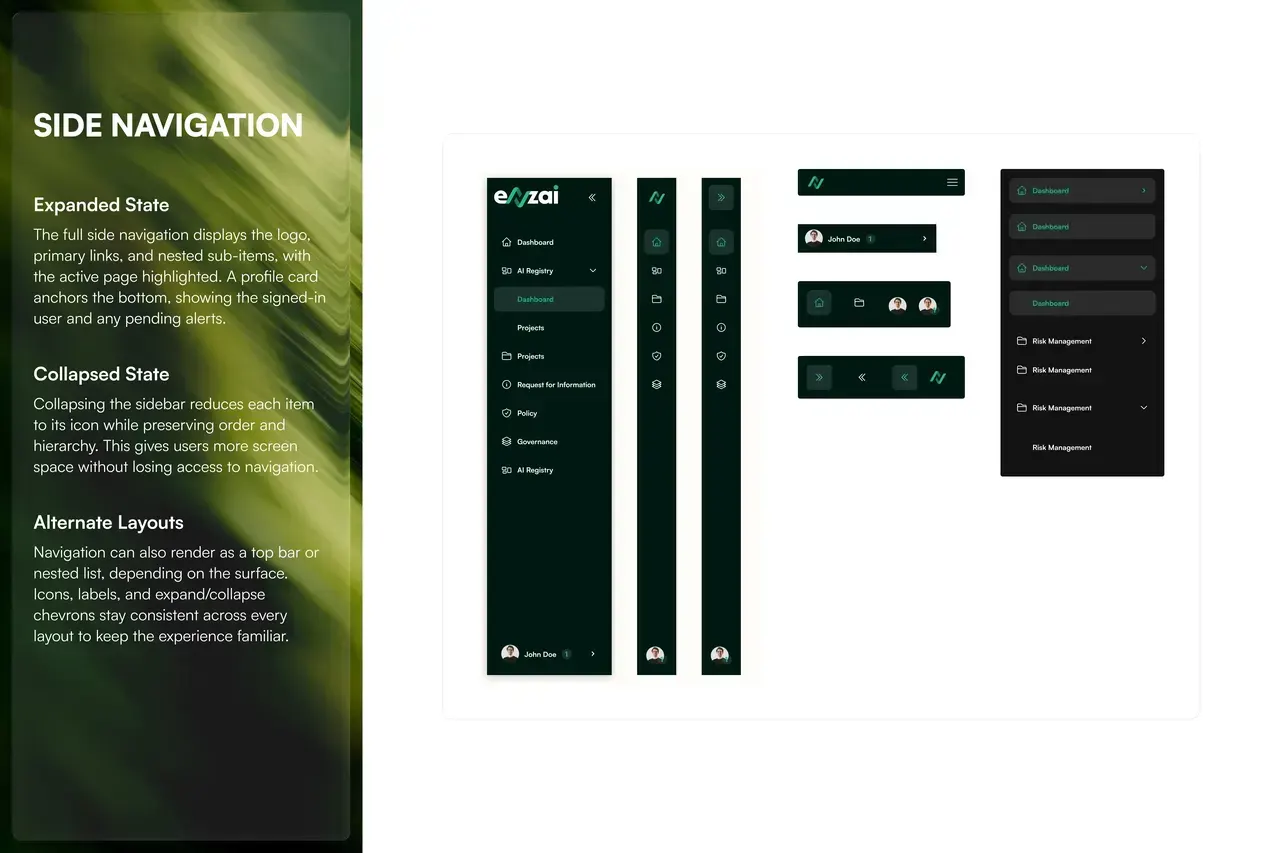
Every component built to one standard: Buttons across three sizes and every state, icon buttons, grouped controls, dropdowns, and notification patterns, all documented so the internal team could extend the system without reinventing it.
Consistency as a trust signal: For a governance platform selling compliance discipline, an inconsistent interface undermines the pitch, so every pattern was built once and reused everywhere.
Full Webflow rebuild support: The system was disciplined enough to carry a complete rebuild across product, solutions, and resource pages, not just a visual refresh.
Full token system built from scratch: A refined green palette with named, purposeful colours (Palm Green, Spruce, Mountain Meadow) replaced generic swatches, paired with a disciplined greyscale and dedicated status colours for compliance-critical states.
Every component built to one standard: Buttons across three sizes and every state, icon buttons, grouped controls, dropdowns, and notification patterns, all documented so the internal team could extend the system without reinventing it.
Consistency as a trust signal: For a governance platform selling compliance discipline, an inconsistent interface undermines the pitch, so every pattern was built once and reused everywhere.
Full Webflow rebuild support: The system was disciplined enough to carry a complete rebuild across product, solutions, and resource pages, not just a visual refresh.
Organizational Context
Product strategy: Defined by Enzai's leadership around a single brief, moving the platform's site and product from an early-stage-startup look to the authority a company serving Fortune 500 compliance teams needs to project.
Discovery & UX research: Started with an audit of the existing site and product interface against that brief, benchmarking Enzai's visual language against compliance and enterprise software peers to understand what actually signals trust and rigour in that category, then mapping inconsistencies across the existing UI, mismatched button states, ad hoc colour use, undocumented patterns, that were quietly working against the brand's credibility.
Metrics: Not available in a form that's fair to report, see Success Framework below.
Processes: 5 Product Designers, 2 Client Stakeholders, 2 Software Developers and 1 Team Manager, over a 6-month engagement in 2025.
Product strategy: Defined by Enzai's leadership around a single brief, moving the platform's site and product from an early-stage-startup look to the authority a company serving Fortune 500 compliance teams needs to project.
Discovery & UX research: Started with an audit of the existing site and product interface against that brief, benchmarking Enzai's visual language against compliance and enterprise software peers to understand what actually signals trust and rigour in that category, then mapping inconsistencies across the existing UI, mismatched button states, ad hoc colour use, undocumented patterns, that were quietly working against the brand's credibility.
Metrics: Not available in a form that's fair to report, see Success Framework below.
Processes: 5 Product Designers, 2 Client Stakeholders, 2 Software Developers and 1 Team Manager, over a 6-month engagement in 2025.

Design Challenge
Design Challenge
Enzai's product had matured well past its early-stage roots, $4M in seed funding, Fortune 500 clients, compliance coverage across the EU AI Act, ISO 42001, and NIST RMF, but its site still read like the startup it used to be. For a governance platform whose entire pitch is discipline and trust, that mismatch was a liability: a compliance product with an inconsistent interface undermines its own credibility before a prospect reads a single feature. The challenge was building a design system rigorous enough to carry that authority across every page, product, solutions, and resources, while giving Enzai's own team a shared language to keep shipping consistently as the platform kept expanding.
Enzai's product had matured well past its early-stage roots, $4M in seed funding, Fortune 500 clients, compliance coverage across the EU AI Act, ISO 42001, and NIST RMF, but its site still read like the startup it used to be. For a governance platform whose entire pitch is discipline and trust, that mismatch was a liability: a compliance product with an inconsistent interface undermines its own credibility before a prospect reads a single feature. The challenge was building a design system rigorous enough to carry that authority across every page, product, solutions, and resources, while giving Enzai's own team a shared language to keep shipping consistently as the platform kept expanding.
The Result
The Result
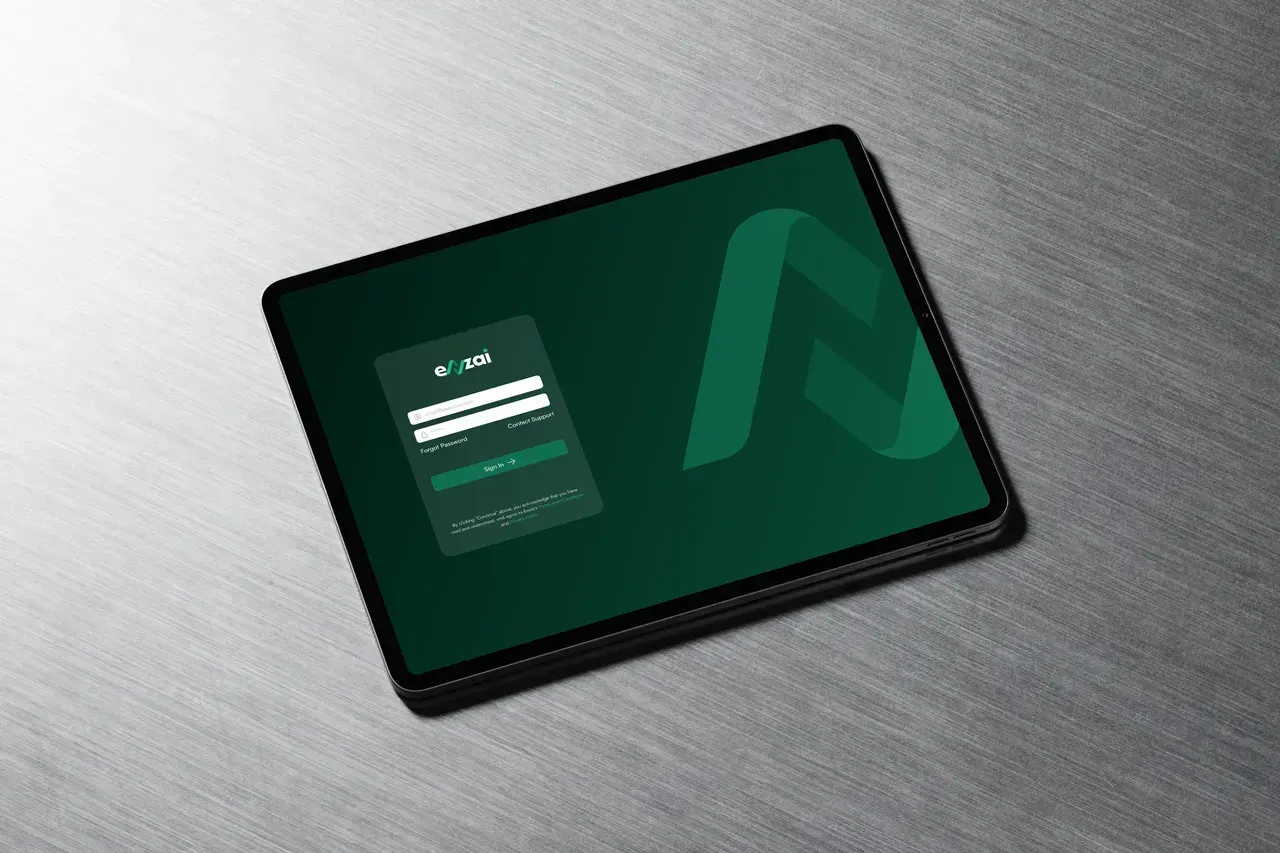
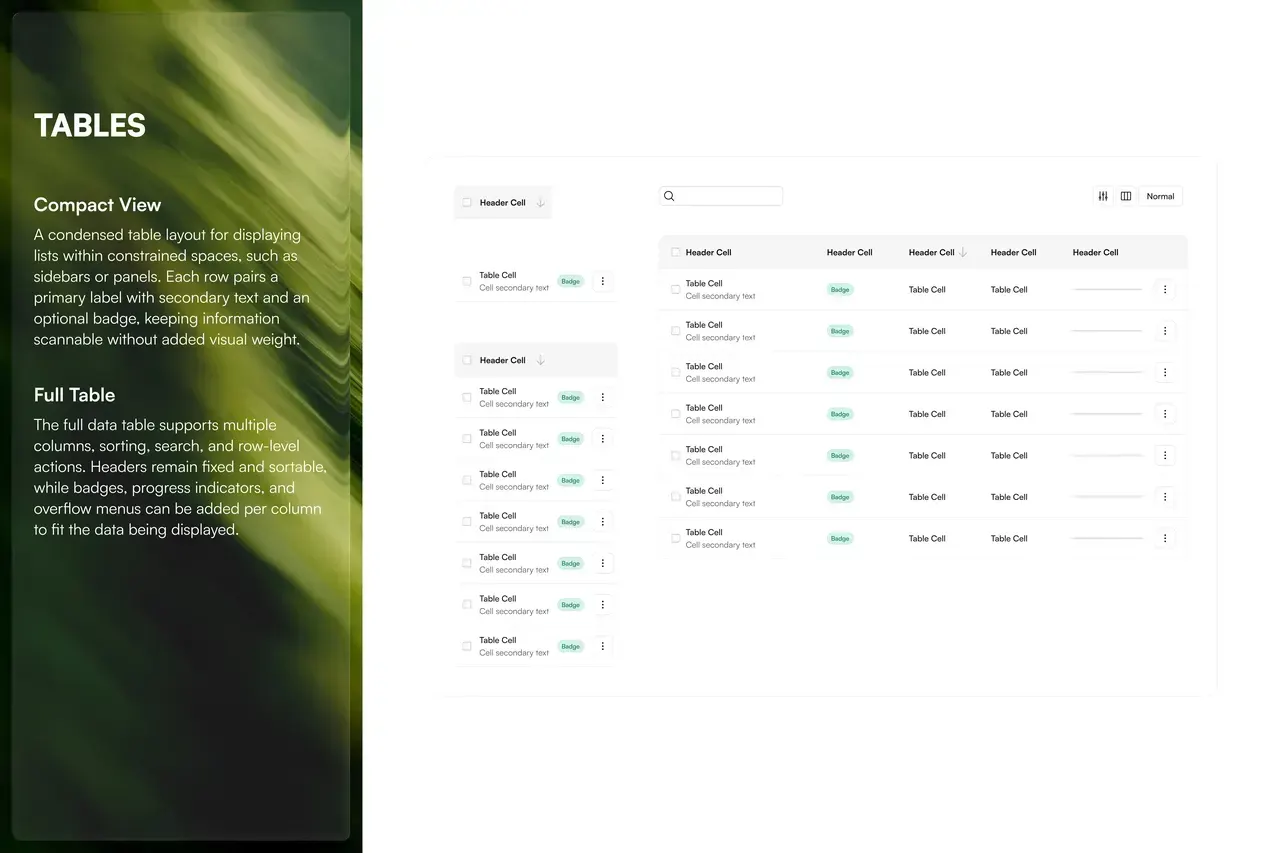
I built a full token set from the ground up: a refined green palette with named, purposeful colours (Palm Green, Spruce, Mountain Meadow) instead of generic swatches, paired with a disciplined greyscale and dedicated status colours for compliance-critical states like warnings and errors. Every component, buttons across three sizes and every state, icon buttons, grouped controls, dropdowns, and notification patterns, was documented so the internal team could extend the system without reinventing it. The system was built disciplined enough to support a full Webflow rebuild across Enzai's product, solutions, and resource pages.
I built a full token set from the ground up: a refined green palette with named, purposeful colours (Palm Green, Spruce, Mountain Meadow) instead of generic swatches, paired with a disciplined greyscale and dedicated status colours for compliance-critical states like warnings and errors. Every component, buttons across three sizes and every state, icon buttons, grouped controls, dropdowns, and notification patterns, was documented so the internal team could extend the system without reinventing it. The system was built disciplined enough to support a full Webflow rebuild across Enzai's product, solutions, and resource pages.
Success Framework
Success Framework
Enzai's redesign spans the design system, the web app, and the marketing site, and the engagement went through several phases with different teams and companies contributing to the rebuild over time. That handoff history means there isn't a clean, single before-and-after dataset to report here, metrics from one phase don't isolate cleanly against changes made in another. What's consistent across every phase is the system itself: the token set, documented component states, and interaction patterns became the throughline that kept the web app and website consistent as ownership of the build moved between teams.
Enzai's redesign spans the design system, the web app, and the marketing site, and the engagement went through several phases with different teams and companies contributing to the rebuild over time. That handoff history means there isn't a clean, single before-and-after dataset to report here, metrics from one phase don't isolate cleanly against changes made in another. What's consistent across every phase is the system itself: the token set, documented component states, and interaction patterns became the throughline that kept the web app and website consistent as ownership of the build moved between teams.
Personal Reflection
Personal Reflection
Enzai's brief came down to one sentence: stop looking like a startup that got funded, start looking like the authority your customers already trust you to be. Design systems are usually pitched as an efficiency play, ship faster, stay consistent, but for a governance platform I treated it as the actual product story. Every named colour token, every documented button state, every dropdown built once and reused everywhere was a small proof point: this is a company that governs its own systems as carefully as it asks its clients to govern theirs. Building the token set, a real palette with roles like Spruce for stability and Mountain Meadow for balance, and documenting every component state down to disabled and icon-only variants, taught me that design systems for regulated industries carry more weight than they do anywhere else.
Enzai's brief came down to one sentence: stop looking like a startup that got funded, start looking like the authority your customers already trust you to be. Design systems are usually pitched as an efficiency play, ship faster, stay consistent, but for a governance platform I treated it as the actual product story. Every named colour token, every documented button state, every dropdown built once and reused everywhere was a small proof point: this is a company that governs its own systems as carefully as it asks its clients to govern theirs. Building the token set, a real palette with roles like Spruce for stability and Mountain Meadow for balance, and documenting every component state down to disabled and icon-only variants, taught me that design systems for regulated industries carry more weight than they do anywhere else.
Product Vision & Next Steps
Product Vision &
Next Steps
My involvement with Enzai concluded with the design system and its documentation handed off complete. The natural next phase, expanding the component library further and running a proper analysis of how the system performs once fully rolled out across the site, wasn't something I got the chance to do within this engagement. That work sits with whoever continues to own the design system going forward.
My involvement with Enzai concluded with the design system and its documentation handed off complete. The natural next phase, expanding the component library further and running a proper analysis of how the system performs once fully rolled out across the site, wasn't something I got the chance to do within this engagement. That work sits with whoever continues to own the design system going forward.