London Sound Academy
London’s leading electronic music academy
London’s leading electronic music academy
Project Details
Project Details
Services
Web App
Web App
Web Design
Web Design
Creative Strategy
Creative Strategy
Client
London Sound Academy
London Sound Academy
Location
London, England
London, England
Duration
12 months • 2025
12 months • 2025
Team involved
1 Lead Product Designer
2 Product Designers
2 Software Developers
2 Client Stakeholders
1 Lead Product Designer
2 Product Designers
2 Software Developers
2 Client Stakeholders
Info
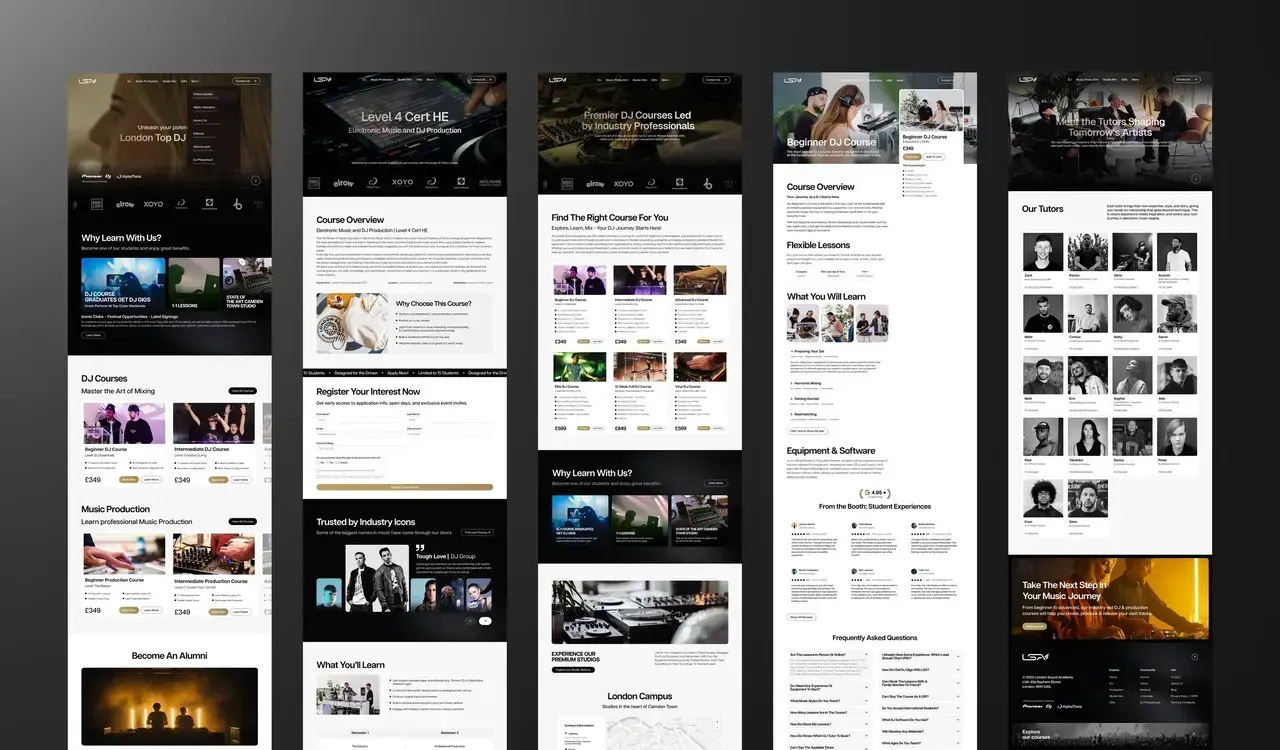
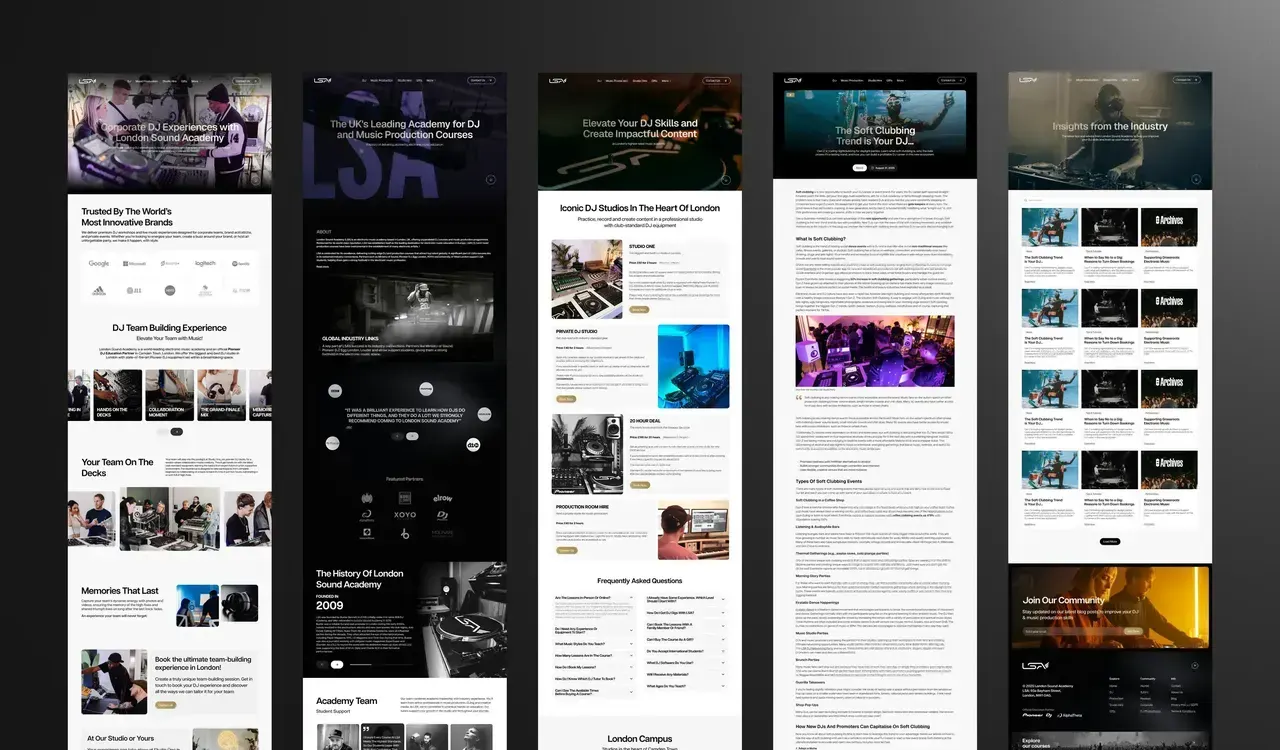
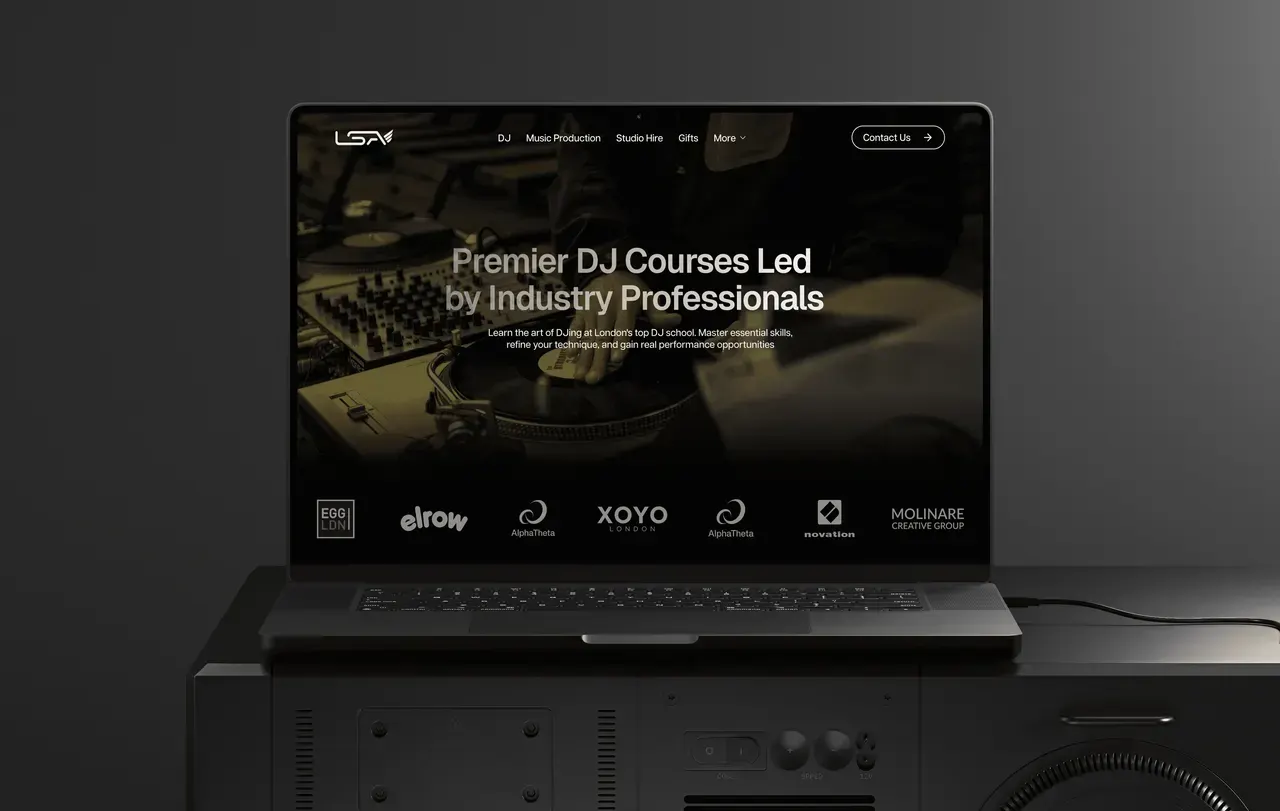
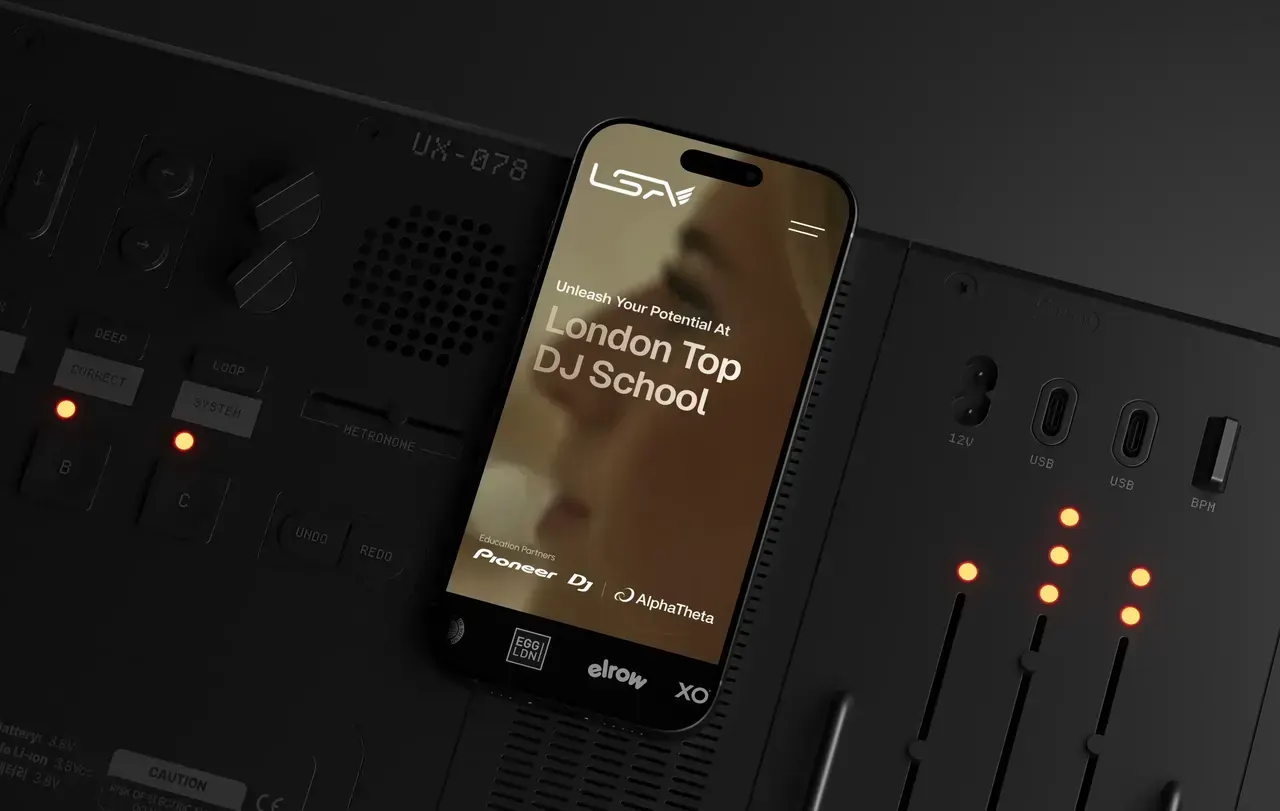
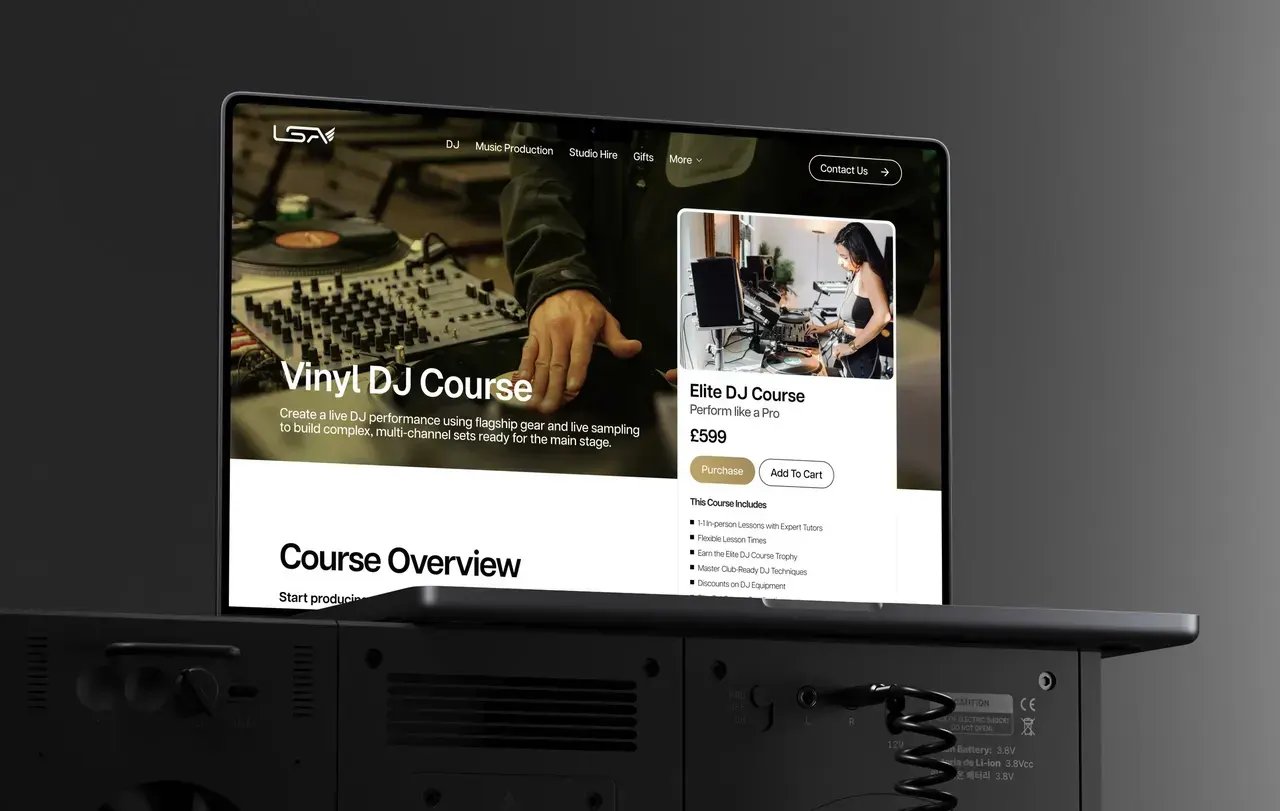
London Sound Academy, a leading electronic music academy in London, needed a stronger website system to support its DJ and music production courses. The project focused on building a bold, music-led digital presence with clearer course pathways, stronger tutor and studio positioning, and a booking-focused structure designed to turn aspiring artists into students.
London Sound Academy, a leading electronic music academy in London, needed a stronger website system to support its DJ and music production courses. The project focused on building a bold, music-led digital presence with clearer course pathways, stronger tutor and studio positioning, and a booking-focused structure designed to turn aspiring artists into students.
Impact & Context
Impact & Context
The Impact
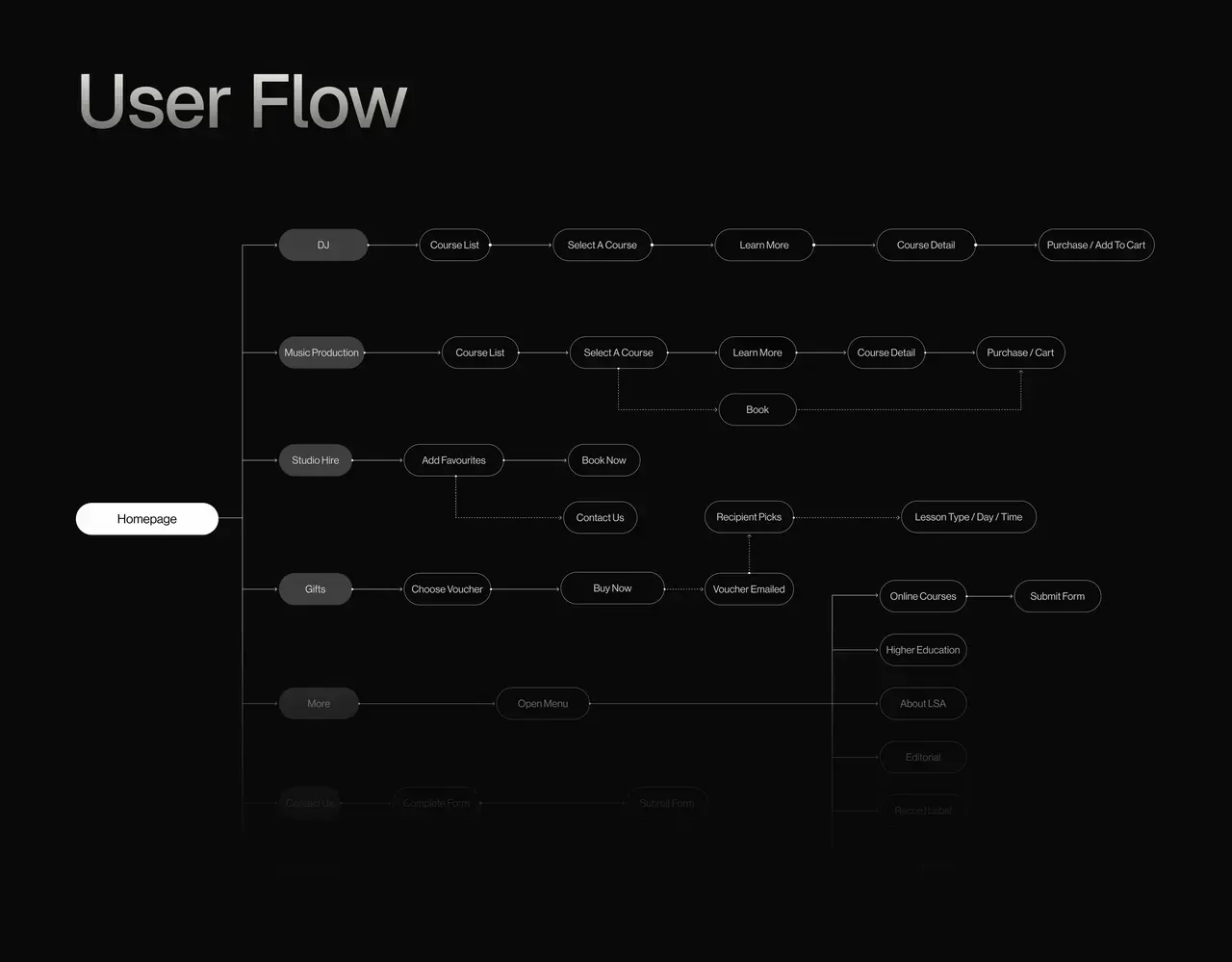
I structured the redesign around a measurable success framework, targeting conversion, activation, and support load, and delivered the design system and site architecture needed to unify a booking experience that had been split across a marketing site, a third-party scheduler, and manual admin work.
I structured the redesign around a measurable success framework, targeting conversion, activation, and support load, and delivered the design system and site architecture needed to unify a booking experience that had been split across a marketing site, a third-party scheduler, and manual admin work.
Highlights
Editorial rebrand: Repositioned LSA from a functional course-booking site into a premium, editorial brand without slowing down the booking flow that drives revenue.
Scalable CMS architecture: Structured courses, landing pages, and gifts as CMS collections, and built dedicated ad-traffic landing pages per course.
Booking system redesign (in progress): Designed a custom, branded front end on top of LSA's existing Acuity backend to fix real, reported usability failures in scheduling.
Success framework: Modeled target conversion, activation, and support-reduction metrics to give the business a measurable definition of a successful launch.
Editorial rebrand: Repositioned LSA from a functional course-booking site into a premium, editorial brand without slowing down the booking flow that drives revenue.
Scalable CMS architecture: Structured courses, landing pages, and gifts as CMS collections, and built dedicated ad-traffic landing pages per course.
Booking system redesign (in progress): Designed a custom, branded front end on top of LSA's existing Acuity backend to fix real, reported usability failures in scheduling.
Success framework: Modeled target conversion, activation, and support-reduction metrics to give the business a measurable definition of a successful launch.
Organizational Context
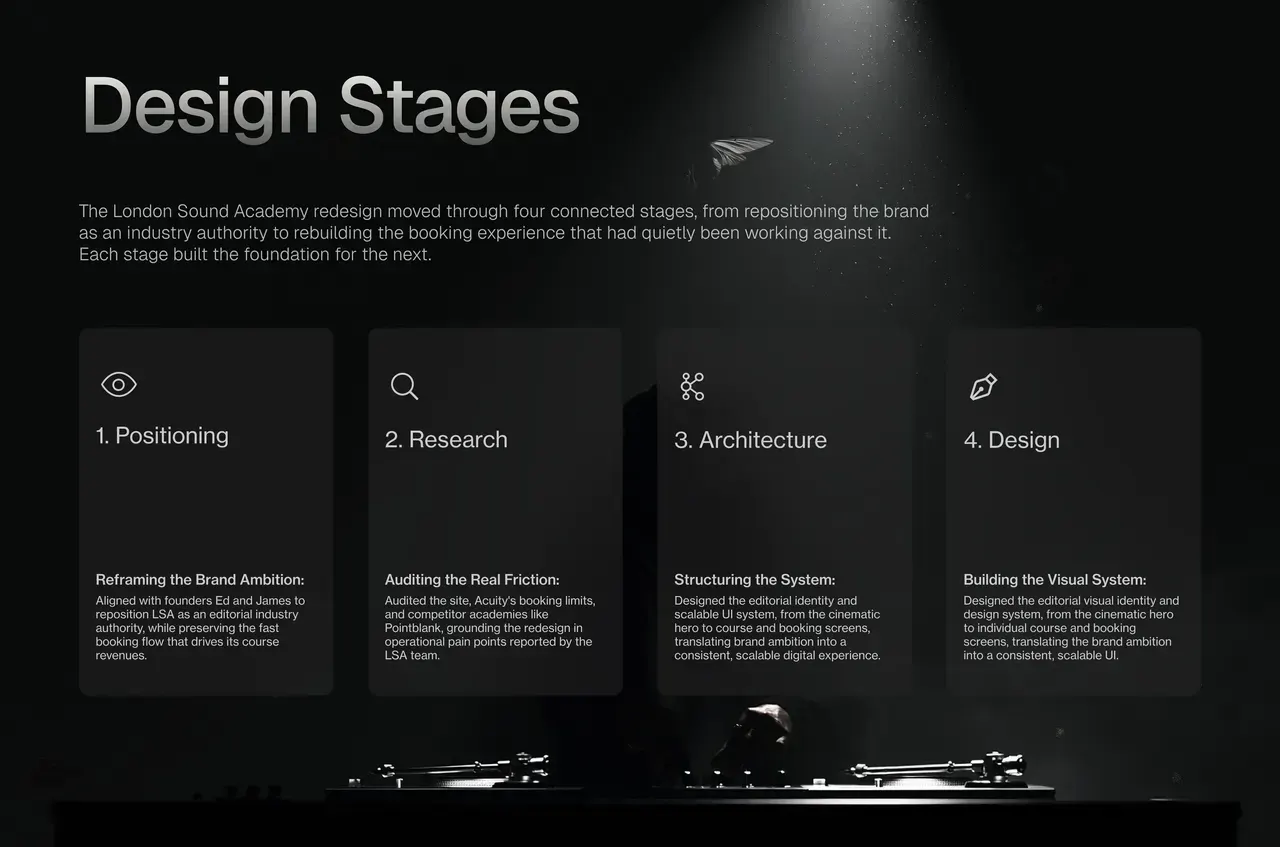
Product strategy: Defined by LSA's founders, Ed and James, who wanted the brand to read as an established authority in the music industry, not a small course provider, ahead of expansion into higher-education partnerships and international markets.
Discovery & UX research: Grounded in direct operational pain points reported by the LSA team rather than formal user interviews, given the size of the team and the pace of the roadmap. Issues like duplicate student records, invisible tutor availability, and unmanageable one-off bookings came directly from LSA's day-to-day experience running the business.
Metrics: No first-party analytics access at the time of design. Success metrics were modeled from publicly available traffic estimates and LSA's current course pricing to give the business a target framework rather than a retrospective measurement.
Processes: A remote, multi-designer, multi-developer team working in phases, design system and core site first, booking, dashboard, and localisation as later phases, over a 6+ month engagement.
Product strategy: Defined by LSA's founders, Ed and James, who wanted the brand to read as an established authority in the music industry, not a small course provider, ahead of expansion into higher-education partnerships and international markets.
Discovery & UX research: Grounded in direct operational pain points reported by the LSA team rather than formal user interviews, given the size of the team and the pace of the roadmap. Issues like duplicate student records, invisible tutor availability, and unmanageable one-off bookings came directly from LSA's day-to-day experience running the business.
Metrics: No first-party analytics access at the time of design. Success metrics were modeled from publicly available traffic estimates and LSA's current course pricing to give the business a target framework rather than a retrospective measurement.
Processes: A remote, multi-designer, multi-developer team working in phases, design system and core site first, booking, dashboard, and localisation as later phases, over a 6+ month engagement.
Design Challenge
Design Challenge
LSA had two problems that pulled in opposite directions. The brand needed to look like a premium, decade-proven authority, backed by 260+ five-star reviews, official Pioneer DJ education partner status, and alumni who play at Ministry of Sound and have charted in the UK Top 10, but the operational layer underneath was actively working against that positioning. Acuity, the third-party scheduler LSA relied on, gave students no visibility into tutor availability before booking, merged users with the same name into a single record, and made even simple tasks like rescheduling a one-off lesson impossible without a code tied to a specific booking. Every one of those failures generated a support request, and every support request undercut the "world famous, five-star" brand the marketing site was trying to build. The real challenge was making brand and operations tell one story, not two. I led the design of an editorial front end and a booking experience underneath it built to reinforce that story together, instead of quietly undermining it.
LSA had two problems that pulled in opposite directions. The brand needed to look like a premium, decade-proven authority, backed by 260+ five-star reviews, official Pioneer DJ education partner status, and alumni who play at Ministry of Sound and have charted in the UK Top 10, but the operational layer underneath was actively working against that positioning. Acuity, the third-party scheduler LSA relied on, gave students no visibility into tutor availability before booking, merged users with the same name into a single record, and made even simple tasks like rescheduling a one-off lesson impossible without a code tied to a specific booking. Every one of those failures generated a support request, and every support request undercut the "world famous, five-star" brand the marketing site was trying to build. The real challenge was making brand and operations tell one story, not two. I led the design of an editorial front end and a booking experience underneath it built to reinforce that story together, instead of quietly undermining it.
The Result
The Result
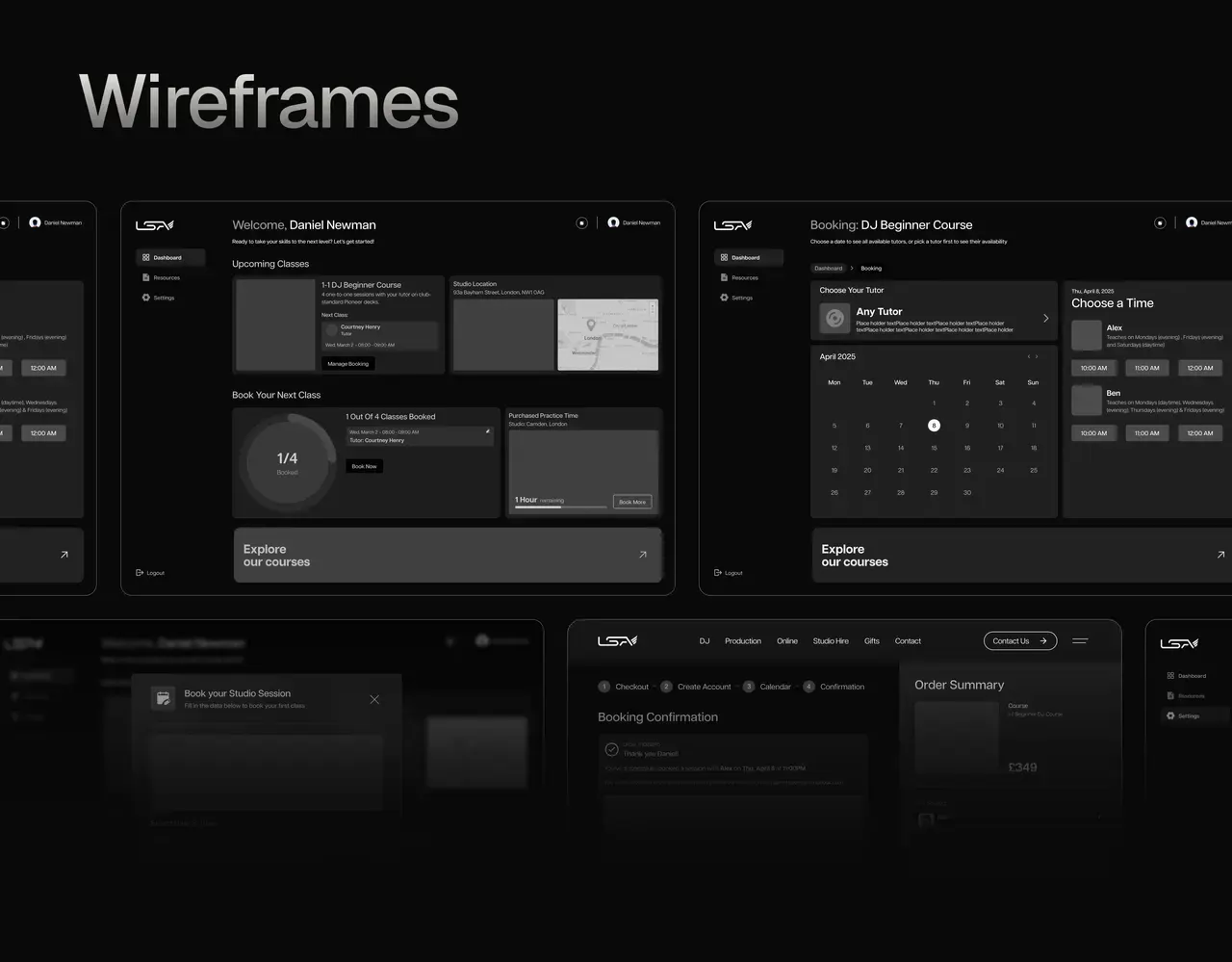
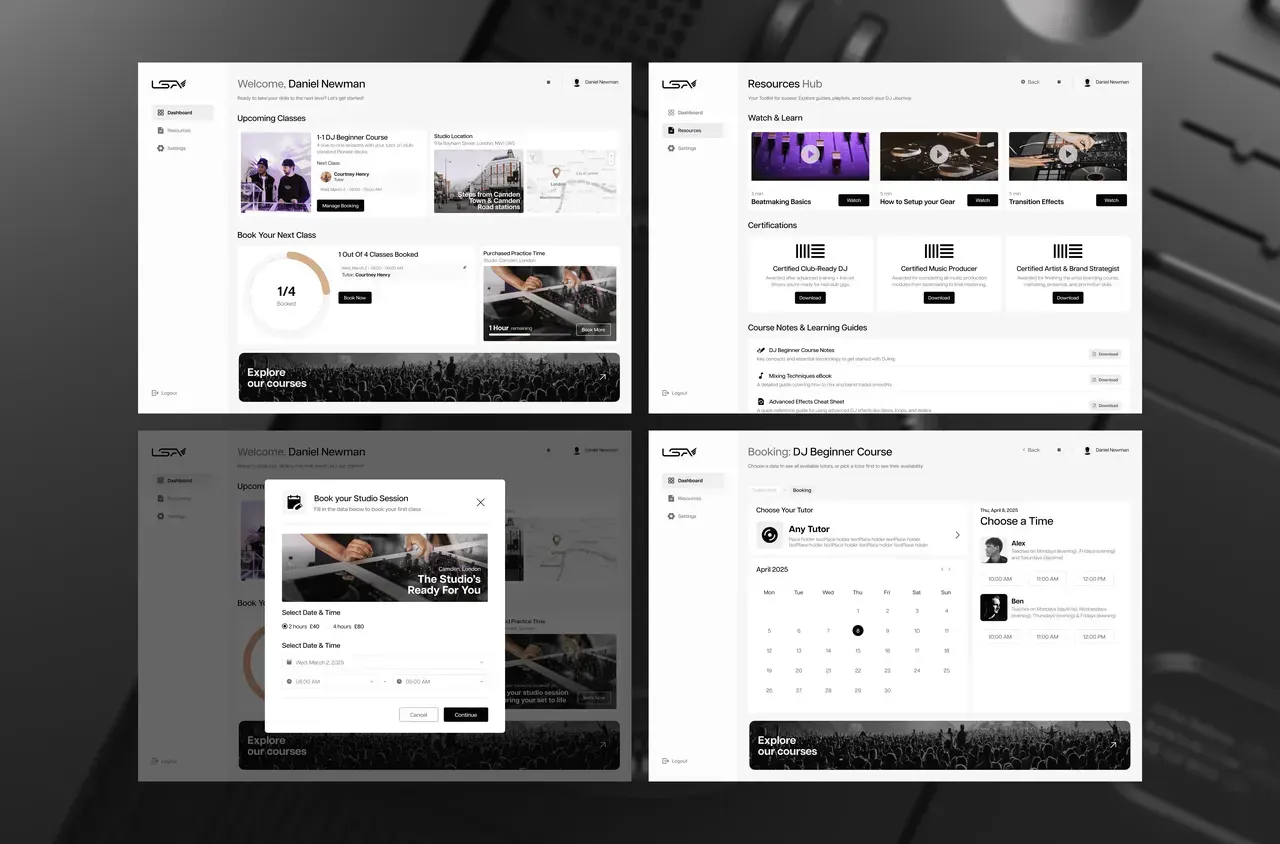
The redesign runs on two connected layers. The brand layer rebuilt the marketing site around LSA's real differentiators, studio, community, gigs, and industry partnerships, using a cinematic video hero, dedicated pages for the record label and alumni, and course pages restructured as CMS collections so the team can publish new courses and gifts without a developer. The operational layer, still in build, replaces Acuity's default interface with a custom, branded front end built on the same backend, giving students visibility into tutor availability, self-serve rescheduling, and a single account instead of duplicate records, while giving LSA control over the emails and reports Acuity previously handled invisibly.
The redesign runs on two connected layers. The brand layer rebuilt the marketing site around LSA's real differentiators, studio, community, gigs, and industry partnerships, using a cinematic video hero, dedicated pages for the record label and alumni, and course pages restructured as CMS collections so the team can publish new courses and gifts without a developer. The operational layer, still in build, replaces Acuity's default interface with a custom, branded front end built on the same backend, giving students visibility into tutor availability, self-serve rescheduling, and a single account instead of duplicate records, while giving LSA control over the emails and reports Acuity previously handled invisibly.
Success Framework
Success Framework
The redesign is live on the marketing side and mid-rollout on the operational side, and what stands out to me isn't a single metric, it's that LSA's site now leads with the things that actually made them credible in the first place: the studio, the community, alumni playing at Ministry of Sound, 260+ five-star reviews, instead of reading like a generic course catalogue. Courses, landing pages, and gifts now live in CMS collections, so LSA can publish new offers without waiting on a developer, and every course has its own landing page built to actually convert ad traffic instead of getting lost in a general listing. The part I'm proudest of, though, is probably the success framework itself. LSA now has a concrete bar, conversion, activation, support load, to hold the finished platform against, rather than shipping and hoping it worked.
The redesign is live on the marketing side and mid-rollout on the operational side, and what stands out to me isn't a single metric, it's that LSA's site now leads with the things that actually made them credible in the first place: the studio, the community, alumni playing at Ministry of Sound, 260+ five-star reviews, instead of reading like a generic course catalogue. Courses, landing pages, and gifts now live in CMS collections, so LSA can publish new offers without waiting on a developer, and every course has its own landing page built to actually convert ad traffic instead of getting lost in a general listing. The part I'm proudest of, though, is probably the success framework itself. LSA now has a concrete bar, conversion, activation, support load, to hold the finished platform against, rather than shipping and hoping it worked.
Conversion
Targeting a 25% relative increase in course-page-to-purchase conversion.
Activation
Targeting 85% activation within seven days: account setup and first lesson booked.
Support load
Cut booking-support requests by 30%, resolving acuity-related friction.
Modeled revenue impact
Monthly bookings: £13,300 projected when conversion-target is achieved.
Personal Reflection
Personal Reflection
The redesign is live on the marketing side and mid-rollout on the operational side, and what stands out to me isn't a single metric, it's that LSA's site now leads with the things that actually made them credible in the first place: the studio, the community, alumni playing at Ministry of Sound, 260+ five-star reviews, instead of reading like a generic course catalogue. Courses, landing pages, and gifts now live in CMS collections, so LSA can publish new offers without waiting on a developer, and every course has its own landing page built to actually convert ad traffic instead of getting lost in a general listing. The part I'm proudest of, though, is probably the success framework itself. LSA now has a concrete bar, conversion, activation, support load, to hold the finished platform against, rather than shipping and hoping it worked.
The redesign is live on the marketing side and mid-rollout on the operational side, and what stands out to me isn't a single metric, it's that LSA's site now leads with the things that actually made them credible in the first place: the studio, the community, alumni playing at Ministry of Sound, 260+ five-star reviews, instead of reading like a generic course catalogue. Courses, landing pages, and gifts now live in CMS collections, so LSA can publish new offers without waiting on a developer, and every course has its own landing page built to actually convert ad traffic instead of getting lost in a general listing. The part I'm proudest of, though, is probably the success framework itself. LSA now has a concrete bar, conversion, activation, support load, to hold the finished platform against, rather than shipping and hoping it worked.
Product Vision & Next Steps
Product Vision &
Next Steps
The brand and content layer are live; the operational layer is the next phase of the same roadmap the LSA team and I scoped together. Next is shipping the branded booking layer itself, a custom Acuity front end with Memberstack accounts that gives students a persistent login, visible tutor availability, and self-serve rescheduling. Alongside that, payments move to Stripe with Klarna support, unlocking buy-now-pay-later at checkout and room for upsells at the point of purchase. Localisation for Germany follows, using Webflow's native localisation for a German subdomain, machine-translated and proofread by a native speaker, with hreflang tags in place for SEO, as the template for whichever market comes next. And once first-party analytics are live on the new platform, the last step is closing the loop, validating the success framework against real conversion, activation, and support data, and iterating from there.
The brand and content layer are live; the operational layer is the next phase of the same roadmap the LSA team and I scoped together. Next is shipping the branded booking layer itself, a custom Acuity front end with Memberstack accounts that gives students a persistent login, visible tutor availability, and self-serve rescheduling. Alongside that, payments move to Stripe with Klarna support, unlocking buy-now-pay-later at checkout and room for upsells at the point of purchase. Localisation for Germany follows, using Webflow's native localisation for a German subdomain, machine-translated and proofread by a native speaker, with hreflang tags in place for SEO, as the template for whichever market comes next. And once first-party analytics are live on the new platform, the last step is closing the loop, validating the success framework against real conversion, activation, and support data, and iterating from there.